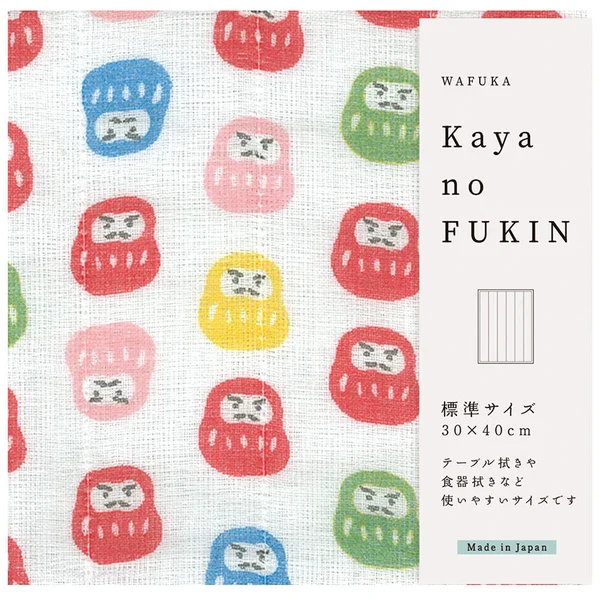
Wafuku Kaya Cloth Dishcloth - Daruma
A traditional Japanese kaya cloth (蚊帳ふきん) made from fine gauze-woven cotton, featuring an original Daruma illustration. Kaya fabric originated as mosquito-net textile and has long been repurposed as a kitchen cloth in Japan — its open, multi-layered weave makes it exceptionally absorbent and quick-drying compared to conventional dish cloths.
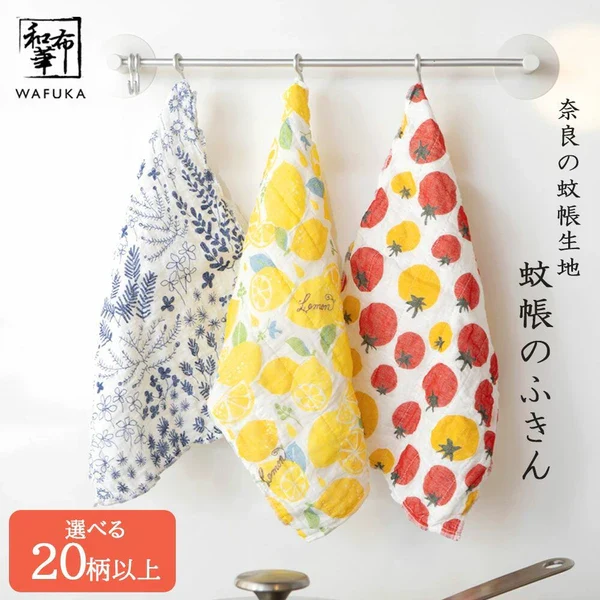
Wafuku's kaya cloths are yarn-dyed in Osaka and woven in Nara Prefecture, continuing a regional textile tradition. The fabric softens and becomes more absorbent with each wash. Each cloth features an original illustrated design — seasonal motifs, botanical prints, and character-led patterns that bring personality to everyday kitchen tasks.
Features
- Traditional kaya (gauze) weave — highly absorbent and quick-drying.
- Softens with washing; performance improves over time.
- Yarn-dyed in Osaka, woven in Nara Prefecture using traditional methods.
- Versatile use as a dish cloth, hand towel, or light cleaning cloth.
- Original Daruma illustrated design — practical and decorative.
Specifications
- Size: Approx. 30 × 50 cm
- Material: 1st sheet (printed side) 100% cotton; 2nd–5th sheets 100% rayon (5 layers laminated together)
- Country of Manufacture: Japan
Original: $8.61
-65%$8.61
$3.01More Images
Wafuku Kaya Cloth Dishcloth - Daruma
A traditional Japanese kaya cloth (蚊帳ふきん) made from fine gauze-woven cotton, featuring an original Daruma illustration. Kaya fabric originated as mosquito-net textile and has long been repurposed as a kitchen cloth in Japan — its open, multi-layered weave makes it exceptionally absorbent and quick-drying compared to conventional dish cloths.
Wafuku's kaya cloths are yarn-dyed in Osaka and woven in Nara Prefecture, continuing a regional textile tradition. The fabric softens and becomes more absorbent with each wash. Each cloth features an original illustrated design — seasonal motifs, botanical prints, and character-led patterns that bring personality to everyday kitchen tasks.
Features
- Traditional kaya (gauze) weave — highly absorbent and quick-drying.
- Softens with washing; performance improves over time.
- Yarn-dyed in Osaka, woven in Nara Prefecture using traditional methods.
- Versatile use as a dish cloth, hand towel, or light cleaning cloth.
- Original Daruma illustrated design — practical and decorative.
Specifications
- Size: Approx. 30 × 50 cm
- Material: 1st sheet (printed side) 100% cotton; 2nd–5th sheets 100% rayon (5 layers laminated together)
- Country of Manufacture: Japan
Product Information
Product Information
Shipping & Returns
Shipping & Returns
Description
A traditional Japanese kaya cloth (蚊帳ふきん) made from fine gauze-woven cotton, featuring an original Daruma illustration. Kaya fabric originated as mosquito-net textile and has long been repurposed as a kitchen cloth in Japan — its open, multi-layered weave makes it exceptionally absorbent and quick-drying compared to conventional dish cloths.
Wafuku's kaya cloths are yarn-dyed in Osaka and woven in Nara Prefecture, continuing a regional textile tradition. The fabric softens and becomes more absorbent with each wash. Each cloth features an original illustrated design — seasonal motifs, botanical prints, and character-led patterns that bring personality to everyday kitchen tasks.
Features
- Traditional kaya (gauze) weave — highly absorbent and quick-drying.
- Softens with washing; performance improves over time.
- Yarn-dyed in Osaka, woven in Nara Prefecture using traditional methods.
- Versatile use as a dish cloth, hand towel, or light cleaning cloth.
- Original Daruma illustrated design — practical and decorative.
Specifications
- Size: Approx. 30 × 50 cm
- Material: 1st sheet (printed side) 100% cotton; 2nd–5th sheets 100% rayon (5 layers laminated together)
- Country of Manufacture: Japan